


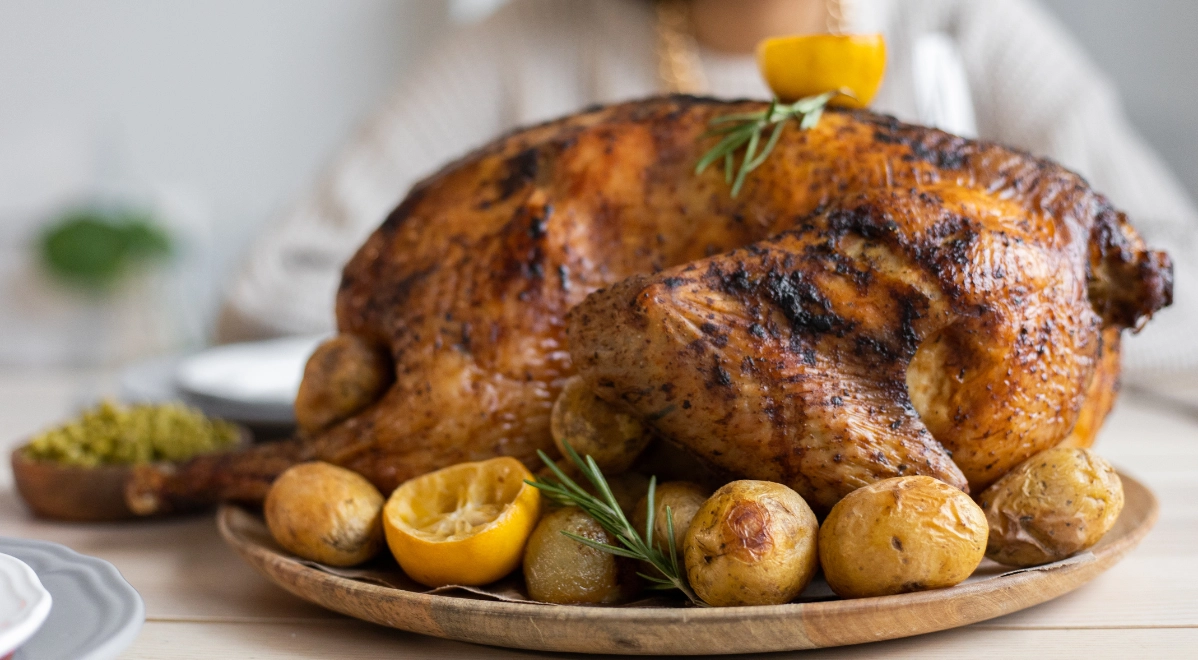

Few meals carry as much anticipation as Christmas dinner. The house fills with the aroma of roasting poultry, vegetables caramelising in the oven, and gravy bubbling gently on the hob. At the heart of it all is the Christmas turkey — a bird that symbolises tradition, generosity, and celebration.
Preparing it well doesn’t have to feel daunting. With the right steps, a steady oven, and some classic accompaniments, you can serve a Christmas meal that family and friends will remember fondly. The sections that follow will guide you from choosing the right bird to carving and serving with confidence.
30 minutes
3 hours
3 hours 30 minutes
4 - 6 people
Choosing the Right Christmas Turkey
Selecting the right size and cut is the first step towards a smooth Christmas Day meal. The number of guests, the size of your oven, and your preference for white or dark meat all play a part. A whole Christmas turkey makes a dramatic centrepiece and provides plenty of leftovers. A turkey crown is easier to manage and quicker to roast, ideal for smaller gatherings. If you prefer simplicity, turkey breasts alone provide generous slices of lean white meat without the challenge of carving around bones.
Turkey Breasts, Turkey Crown, or Whole Turkey?
A whole bird has the most theatre and offers both breast and leg meat. The crown, essentially the upper part of the bird with the legs removed, suits those who want mainly breast but still enjoy a traditional presentation. A pair of breasts, boneless and easy to carve, work well if you want the flavour of turkey without the scale of roasting an entire bird.
Whichever option you choose, quality matters. Ordering from Rhug Farm Shop or buying through trusted suppliers that offer organic meat ensures the meat is reared with care, producing better flavour and texture.
Preparing Your Turkey Before Cooking
Preparation makes the difference between a bird that roasts evenly and one that dries out.
Top Tips to Prepare Christmas Turkey
Remove the bird from the fridge and bring it to room temperature before roasting. This helps it cook evenly. Remove the giblets and use them for stock if you wish. Pat the turkey dry with kitchen paper, then check both the neck cavity and the neck end for any packaging or excess fat. Trimming ensures cleaner roasting. A good rub of butter and seasoning makes the skin crisp and flavoursome.
Why Thaw at Room Temperature
If your turkey has been frozen, allow plenty of time for defrosting in the refrigerator, then let it rest at room temperature before roasting.
Cooking from partially frozen risks uneven results. When the turkey is fully thawed, it cooks evenly, so the thickest part of the breast reaches the right temperature while the outer layers stay tender and the juices run clear.
Ingredients for a Herb Butter Roast Turkey Recipe
The classic way to cook turkey for Christmas is with an aromatic herb butter. You will need:
- A whole turkey, crown, or breasts, depending on choice
- 250g softened butter
- 2 cloves garlic, minced
- Zest of half an orange (orange zest)
- A few sprigs of fresh thyme, fresh rosemary, and fresh sage, finely chopped
- 1 onion, quartered
- Salt and freshly ground black pepper
- Streaky bacon rashers for layering over the breast if you wish
- Vegetables such as carrot, celery, and onion, roughly chopped, for the base of the roasting tin
- 250ml white wine or stock
Mix the softened butter with the herbs, garlic, zest, salt, and pepper in a large bowl until smooth. This butter will flavour the meat and help the skin turn that coveted golden shade.
Get ingredients from Rhug Estate
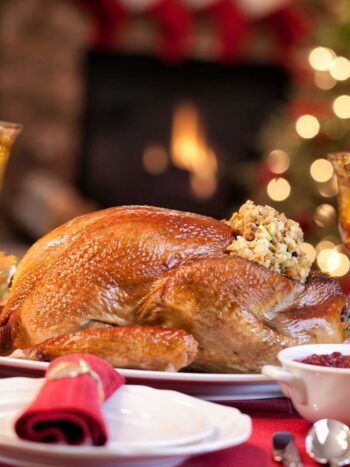
Rhug Estate Organic Turkey – Thanksgiving & Christmas Delivery
Price range: £109 through £183.90
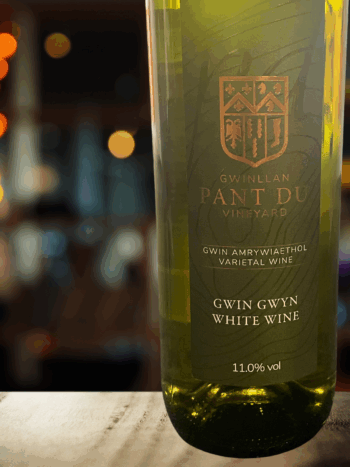
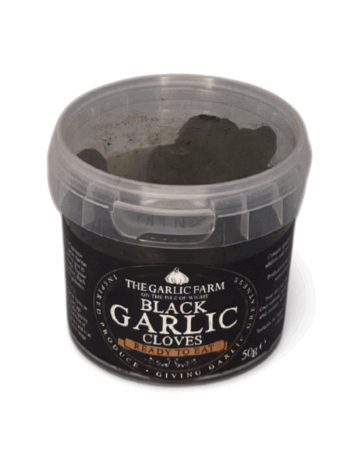
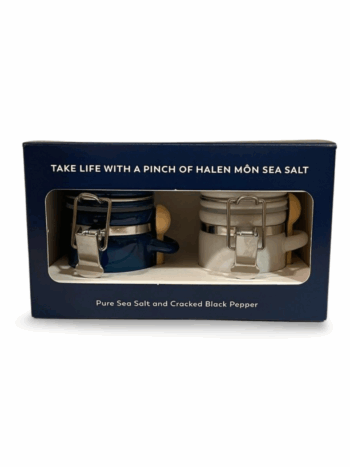



Steps: How to Cook a Christmas Turkey
Cooking Time and Oven Temperature
The golden rule for cooking time is 20 minutes per 500g plus an additional 20 minutes, with the oven set to 180°C fan. A smaller bird or crown may take less, while a larger one can require hours in a hot oven. Always check the fattest part of the breast and thigh with an instant-read thermometer. The internal temperature should reach 74°C, and the juices run clear when pierced with a small, sharp knife. Cover loosely with tin foil or kitchen foil if the bird browns too quickly.
Nutrition Information (Per Serving)
- Calories: 160 kcal
- Protein: 30 g
- Fat: 5 g
- Saturated Fat: 2 g
- Carbohydrates: 1 g
- Sugar: 0 g
- Fiber: 0 g
- Sodium: 200 mg
Serving the Perfect Christmas Turkey
Making the Gravy
While the bird rests, place the roasting pan on the hob over medium heat. Spoon away excess fat, leaving a little behind. Stir in a spoonful of flour and cook until brown. Gradually add stock and wine, whisking with a wooden spoon to lift the caramelised bits from the pan. Simmer until thickened, then strain into a jug. Taste and season with more salt and pepper if needed.
Proper Accompaniments for a Christmas Turkey
No Christmas dinner feels complete without the trimmings. Serve with crisp roast potatoes, pigs in blankets, buttered Brussels sprouts, roasted parsnips and carrots, creamy cauliflower cheese, Yorkshire puddings, tart cranberry sauce, and bread sauce. Each one balances the richness of the turkey and rounds out the festive meal.
Christmas Desserts
After the bird, dessert brings its own traditions. Finish the feast with Christmas pudding served with custard or cream, a rich fruit Christmas cake, warm mince pies, a colourful trifle, or a chocolate yule log. Each adds a celebratory note to the day.
Nutrition Information
Turkey is lean compared with other roasts. A typical serving of breast provides around 150–160 calories, 30g of protein, and minimal trans fat. Dark meat carries slightly more fat but also more flavour. Using butter and bacon naturally adds richness, though trimming excess fat and balancing with vegetables keeps the meal wholesome.
Frequently Asked Questions
Can I cook the turkey a day in advance?
You can roast ahead, allow it to cool completely, then slice and store in the fridge covered with foil. Reheat gently in a covered dish with a splash of stock.
Should I cover my turkey while roasting?
Leave uncovered at the start to crisp the skin, then cover with tin foil partway through to prevent burning. Remove the foil towards the end for colour.
How long does it take to defrost a turkey?
Allow 24 hours in the fridge for every 2kg. Always check that both the cavity and the fattest part are fully thawed before roasting.
The Finishing Touch to Your Christmas Day
With thoughtful preparation, steady roasting, and the right accompaniments, your turkey will stand proudly at the centre of the feast. Choose your turkey well, give it time to rest, and serve with all the trimmings. A carefully cooked turkey for Christmas is more than a dish — it’s the heart of the day, enjoyed with those who matter most.
When you order your turkey from a trusted supplier such as Rhug Farm Shop or explore organic meat online, you set yourself up for a Christmas feast that feels as good as it tastes.
So plan ahead, gather your ingredients, and make this Christmas the year your turkey takes pride of place with confidence and ease.
More from the Rhug Estate Farm Shop
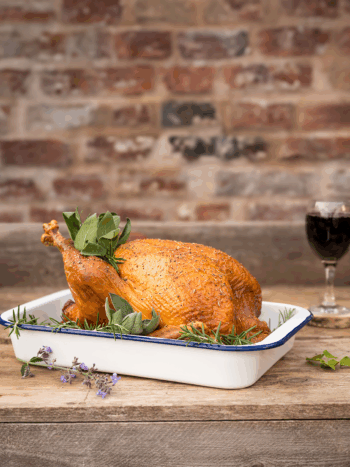


 Organic Beef